How Changing Your HVAC Filter Can Reduce Spring Allergies
Spring is supposed to be the relief season. The heat goes off, the windows can finally open, and the days warm up. For anyone with seasonal allergies, though, spring is also the season of nonstop sneezing, watery eyes, and a foggy head that just will not clear. Most people reach for medication first. The change that often delivers the biggest relief is much simpler and much cheaper: replacing the HVAC filter in your home. The filter is your first line of defense against pollen, dust, and dander, and it works around the clock the moment your system runs. Households scheduling spring HVAC maintenance service in Maryland or anywhere across our region should make filter inspection part of every visit. We can also answer common questions about filter ratings and changes to help you pick the right one for your home.
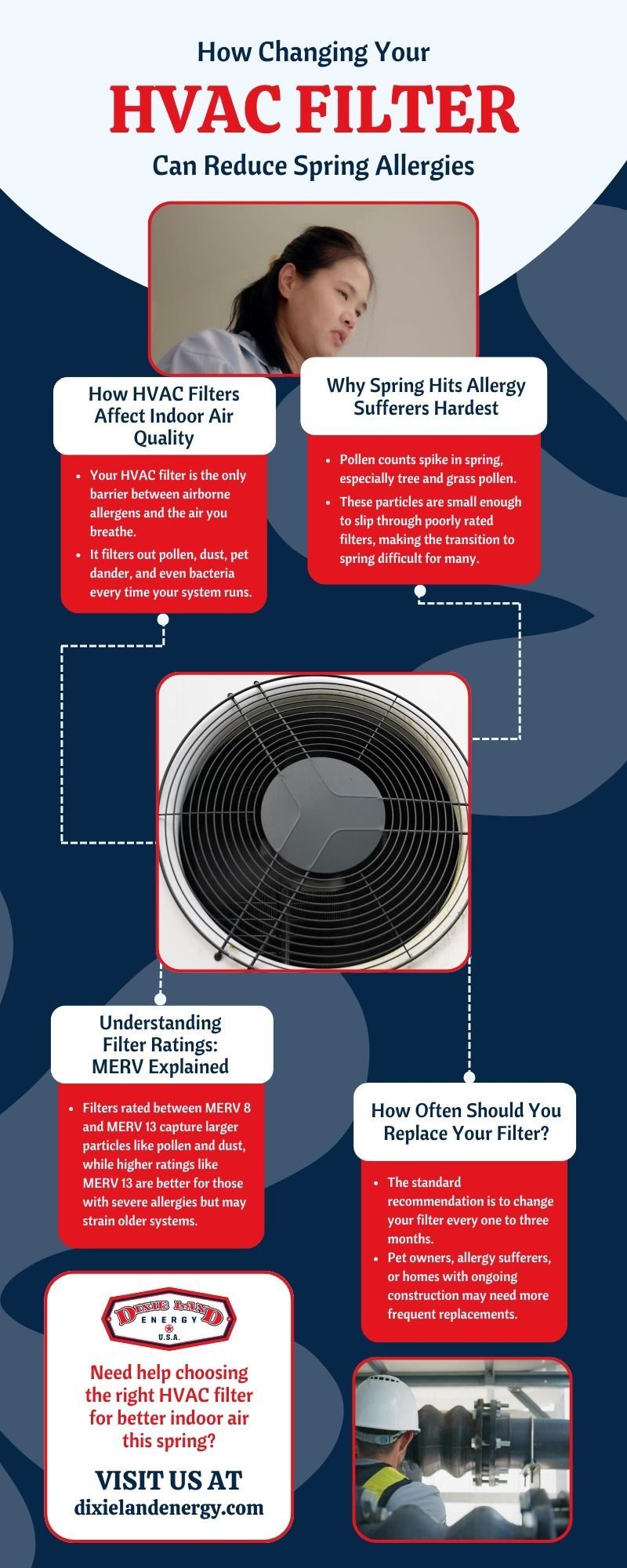
How HVAC Filters Affect Indoor Air Quality
Every time your HVAC system runs, air cycles through the return ducts, passes through the filter, and gets distributed back into your living space through the supply vents. That filter is the only thing standing between the particles in your air and the air your family breathes. A typical home cycles its entire indoor air volume through the HVAC system multiple times per hour, which means the filter performance compounds quickly across a single day of operation.
A clean, well-rated filter captures pollen, dust mite debris, pet dander, mold spores, and a meaningful percentage of smaller particles like bacteria and smoke. A dirty filter does the opposite. It restricts airflow, forces the system to work harder, and lets particles slip through because the loaded media has already reached its capacity. The EPA guide to air cleaners and HVAC filters walks through the basics in plain language, and the takeaway is straightforward: filter selection and replacement timing matter more than most homeowners realize.
Beyond allergens, filters affect overall system efficiency. A loaded filter creates back-pressure on the blower motor, increases energy use, and shortens the life of your equipment. Even homeowners without allergies benefit from regular filter changes, just for the operational savings alone. The math is simple: the cost of a few filter replacements per year is far less than the cost of premature blower motor replacement or efficiency losses on monthly utility bills.
Filters also protect the cooling and heating coils from buildup. Coils coated in dust transfer heat poorly, which forces longer cycles and stresses the compressor. A good filter prevents that buildup, extends coil cleaning intervals, and supports the entire system rather than just the air it filters. This protective role is often overlooked but adds significant value across the equipment lifespan.
Why Spring Hits Allergy Sufferers Hardest
Pollen Counts Spike Quickly
Tree pollen is the first wave each year, with most regions seeing peak counts from early March through late April. Grass pollen takes over from late April into June. The Asthma and Allergy Foundation of America notes that pollen seasons are getting longer and more intense due to climate factors, which means the relief windows that used to exist are shrinking. Indoor air management matters more than ever.
Tree pollen grains are tiny enough to slip past poorly rated filters and to settle deep into furniture, carpets, and bedding. Grass pollen is larger but more abundant, and it tends to enter homes on clothing, shoes, and pets. Either way, what comes inside has to either circulate or get captured. The filter is what determines which.
Indoor Air Often Stays Stagnant After Winter
By April, most homes have been closed up for five months. Dust mite populations peak after a long heating season, and the buildup of skin cells, fabric fibers, and pet hair gives them plenty to feed on. Mold spores from any winter humidity issues, along with smoke residues from candles or fireplaces, all sit in the air ready to circulate. The combined load on indoor air after a long winter is significantly higher than most homeowners expect.
As the AC starts running again or the windows open for fresh air, all that accumulated indoor pollution starts moving. A high-efficiency filter installed in March or early April catches a meaningful amount of it before it reaches your lungs. The EPA's air cleaners and filters reference provides good background on how home filtration fits into a broader indoor air quality strategy. Combining filter upgrades with simple ventilation habits often produces the most dramatic improvement in springtime indoor air.
The transition from heating mode to cooling mode also stirs up settled debris in ductwork. Dust that sat quietly in supply runs through winter gets pushed back into circulation when the blower ramps up for cooling cycles. A new filter catches that initial wave before it becomes a daily exposure source for the household.
Understanding Filter Ratings: MERV Explained
MERV stands for Minimum Efficiency Reporting Value, and it is the standard rating system for HVAC filters. The scale runs from 1 to 20, with higher numbers indicating better small-particle capture. Most residential systems are designed to work with filters between MERV 8 and MERV 13. Going higher than your system can handle creates airflow problems and reduces efficiency, which means picking the right rating matters as much as picking a high one.
MERV 8 vs MERV 11 vs MERV 13
MERV 8 filters capture larger particles such as pollen, dust mite debris, and most pet dander. They are the basic level of protection and the minimum for any system. If you have no specific allergy or air quality concerns, MERV 8 with monthly changes works fine.
MERV 11 captures more of the medium-size particles, including some mold spores, fine dust, and smaller pollen grains. This is the sweet spot for most allergy households. The capture jump from MERV 8 to MERV 11 is significant, and most modern residential systems handle the slightly higher resistance without issue.
MERV 13 captures bacteria, smoke particles, and very fine pollen. It is the recommended level for households with moderate to severe allergies, asthma, or anyone with respiratory conditions. The catch is that MERV 13 can strain older blowers, so always check with a heating company in Pennsylvania or your local technician before upgrading. They can verify your system can handle the rating and recommend any duct or blower adjustments if needed.
When HEPA-Style Filters Make Sense
True HEPA filters capture 99.97% of particles 0.3 microns and larger. They are the gold standard for air filtration, but most residential HVAC systems cannot accommodate them without significant modifications. For households needing HEPA-level filtration, portable HEPA air cleaners in the bedrooms and main living areas are usually the better path. They run alongside the central system without forcing changes to the ductwork.
How Often Should You Replace Your Filter?
The standard answer is every one to three months, but the right answer depends on your home. Households with multiple pets often need monthly changes during peak shedding. Smokers, residents with allergies, or homes with ongoing renovation work also need shorter intervals. Households with no pets and no allergies can usually stretch to three months without issue. The ENERGY STAR cooling overview recommends checking the filter monthly during heavy-use periods and replacing it any time it looks loaded.
The visual check is simple. Pull the filter out, hold it up to a bright light, and look at the surface. If you cannot see light through the media, replace it. If the filter is gray or visibly clogged with hair and dust, replace it regardless of how recently you changed it last.
Set a calendar reminder for the first day of each month during cooling season. The replacement cost is a few dollars per filter, and the consistency matters more than the perfect interval. A filter changed regularly on a slightly conservative schedule beats a high-end filter that gets forgotten for six months.
Other Indoor Air Quality Upgrades Worth Considering
Filters do most of the work, but they are not the only tool. A few upgrades stack on top of regular filter changes and amplify the results. Most install during a single service visit and require minimal ongoing maintenance, which makes them attractive additions for households that want to do more without taking on weekly upkeep.
Whole-house dehumidifiers help in homes with humidity above 50% indoors, which is common in basements and lower levels during muggy weather. Dust mites and mold both struggle below 50% humidity, so simply lowering the indoor moisture level reduces two major allergen sources at once. The system integrates with the existing HVAC and runs only as needed, so the energy cost stays modest across the year.
UV lights installed in the air handler near the coil disrupt biological growth before it establishes. They run quietly and use minimal electricity. Energy recovery ventilators bring controlled fresh air into tightly sealed homes, which prevents the stagnation that builds allergens through long heating seasons. The EPA's care for your air guide to indoor air quality covers these and other strategies in homeowner-friendly terms.
For households with severe allergies or respiratory conditions, combining a high-MERV filter with a portable HEPA cleaner in the bedroom delivers measurable relief without major system modifications. Bedrooms are where occupants spend the most concentrated indoor time, so improving air quality there has the largest single impact on daily symptoms. A standalone HEPA unit costs less than full duct modifications and provides the same level of filtration in the room that matters most.
Quick Wins for Allergy Relief Beyond the Filter
While the filter is the highest-impact single change, a few daily habits compound the benefit. Keep windows closed on high-pollen days, particularly in the morning when counts peak. Take shoes off at the door to keep tracked-in pollen near the entry. Wash bedding weekly in hot water to disrupt dust mite populations and reduce allergen reservoirs in places where you spend the most uninterrupted time.
Pets benefit from a quick wipe-down with a damp cloth before settling indoors after a walk. The pollen they carry on fur ends up on furniture, carpets, and eventually airborne in the home. Showering before bed prevents pollen carried on hair and skin from transferring to pillows and sheets, which is one of the more underrated allergy-management tactics. Households that adopt this single habit often report the most noticeable improvement in morning symptoms.
Vacuuming with a HEPA-equipped vacuum captures fine particles that traditional vacuums simply redistribute. Replacing or laundering soft furnishings such as throw pillows, area rugs, and slipcovers during peak allergy season also reduces the stored allergen load. None of these single actions transforms indoor air on its own, but stacked together they multiply the relief from a good filter.
None of these replace good filtration. They work alongside it. Filter management plus a few habits usually delivers more relief than medication alone, particularly for households that have not paid much attention to their indoor air before. Households trying every approach at once often see meaningful symptom reduction within the first two weeks of consistent practice.
Small Swap, Big Comfort Difference
As a family-run HVAC team operating across our tri-state region since 2002, we have helped thousands of households reduce indoor allergens through smart filter selection, regular maintenance, and targeted indoor air quality upgrades. Our master technicians are factory-trained on Rheem, Bosch, and Lennox systems and bring the same care to filter recommendations as we do to full installations. Whether you need a one-time HVAC maintenance appointment in Delaware or want to talk to your local HVAC company in Rising Sun, MD, about a complete air quality strategy, contact us through our Maryland HVAC team or learn more about our commitment to sustainable, energy-conscious solutions through the Dixie Green Initiative.