The Static Pressure Problem: Why a Powerful HVAC System Can Still Deliver Weak Airflow
You invest in a high-capacity heating and cooling system expecting strong, even airflow throughout your home or business, but sometimes the results tell a different story. Some rooms stay warmer or cooler than others, vents barely push air, and your system seems to run constantly without ever quite catching up.
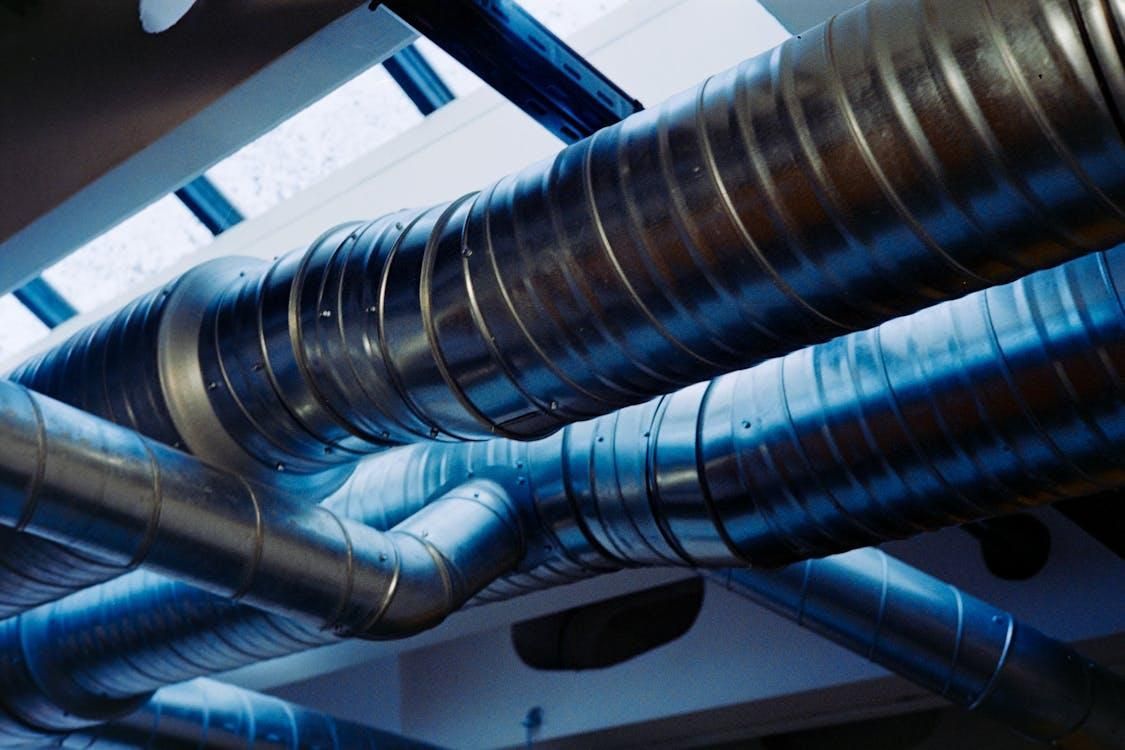
If this sounds familiar, the problem usually isn't the equipment itself; it's what's happening inside your ductwork. This is a phenomenon known as HVAC static pressure, and it's one of the most overlooked reasons why even a brand-new, high-efficiency system can underperform. So why does a powerful unit sometimes deliver weak airflow, and what can actually be done to fix it? Here's what's really going on.
When a Strong System Still Struggles to Move Air
Airflow problems are frustrating because they don't make sense on the surface, especially when every visible sign points to a system that should be working just fine. You paid for a properly sized unit, maybe even upgraded to a higher SEER-rated system, yet certain rooms feel stagnant while others seem fine. The truth is, an HVAC system doesn't operate in isolation. It relies on a network of ducts, returns, filters, and dampers working together to move conditioned air efficiently from the unit to every room. When any part of that network is restricted, undersized, or poorly designed, resistance builds up inside the system, forcing the blower motor to work harder just to push air through the ductwork.
That extra strain reduces the actual volume of air reaching your living spaces, even though the equipment itself is running at full capacity. Left unaddressed, this creates a cascade of issues. Comfort suffers first, but efficiency and equipment longevity aren't far behind. A blower working overtime against excessive resistance draws more energy, shortens the lifespan of major components, and can even lead to premature compressor failure. Homeowners searching for HVAC services in Maryland often describe the same pattern: a system that runs constantly, utility bills that keep climbing, and rooms that never quite feel comfortable no matter how the thermostat is set.
For homeowners and business owners across Maryland, Chester and Delaware Counties, Pennsylvania, dealing with inconsistent comfort despite a capable system, understanding static pressure is the first step toward a real, lasting fix. It also explains why comfort complaints don't always improve after a technician provides heating repair services in Delaware on a visit that only addresses the unit itself rather than the ductwork feeding it.
It's also worth noting that static pressure problems tend to worsen gradually rather than appear all at once, which is part of why they're so easy to overlook. A duct system that performed adequately with an older, lower-capacity unit can become a serious bottleneck once a newer, higher-efficiency system is installed in its place. Modern equipment is often more sensitive to airflow restrictions than older models, meaning a duct network that quietly compensated for years can suddenly become the limiting factor. This is one reason why weak airflow calls for HVAC repair in Maryland so often traces back to ductwork rather than the equipment itself, and why homeowners are frequently surprised to learn their system was never really the underlying problem all along.
What Actually Causes Excessive Static Pressure
Static pressure problems rarely come from a single source. More often, they're the result of several smaller issues compounding over time. Understanding each contributing factor makes it easier to see why airflow can suffer even when the equipment is functioning exactly as designed. The most common culprits include:
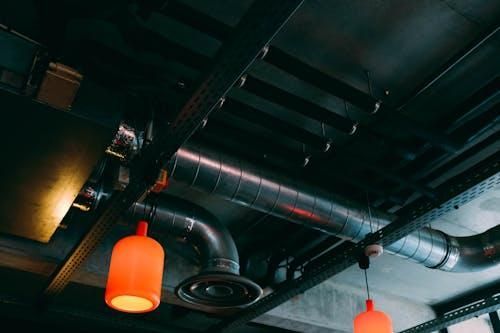
● Restricted or undersized ductwork, where ducts are too narrow for the system's airflow requirements, or include too many sharp bends, forcing air through a tighter space than the blower was designed to handle
● Undersized return air ducts, since returns are just as important as supply ducts, and when they're too small, the system struggles to pull air back in, creating a pressure imbalance that reduces overall efficiency
● Dense or clogged air filters, where a filter that's too restrictive for the system, or simply overdue for replacement, blocks airflow at the exact point where the system needs it most
● Poor original system design, often found in ductwork installed without proper load calculations, or systems retrofitted into homes with mismatched duct sizing
● Closed or blocked vents and dampers, where even something as simple as furniture blocking a return grille can meaningfully contribute to pressure buildup
Any one of these factors can quietly strain a system. Combined, they can turn a properly sized, well-maintained unit into one that never seems to deliver the comfort it should. This is particularly common in older homes throughout the region, where a technician providing HVAC maintenance inspections in Maryland often reveals ductwork that was never updated to match a newer, more powerful system installed years later.
It's also worth pointing out that static pressure doesn't affect every room equally. Rooms located farthest from the air handler, or connected by the longest or most convoluted duct runs, tend to show these symptoms first, and typically show them worst. This is why some households mistake a static pressure issue for a "zoning" problem, assuming certain rooms simply need a separate thermostat or supplemental unit, when in reality the entire duct system is under more resistance than the blower can efficiently overcome. Correcting the root airflow restriction often resolves the room-to-room inconsistency without ever needing a separate zoning system at all, saving both the upfront cost and the added complexity of running a second set of controls.
How Static Pressure Is Diagnosed
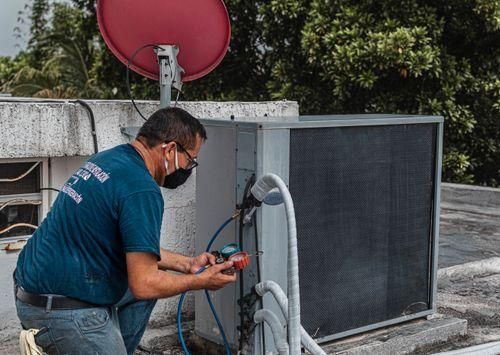
The good news is that problems related to HVAC static pressure aren't a mystery once the right tools and testing methods are applied. A qualified technician measures static pressure using a manometer connected at specific points in the duct system, typically before and after the air handler, to determine the total external static pressure the blower is working against. That reading is then compared against the manufacturer's rated specifications for the equipment.
If the measured pressure exceeds what the system was designed to handle, it confirms that airflow restriction is occurring somewhere in the duct network. From there, a thorough inspection identifies exactly where the resistance is coming from, whether it's an undersized return, a filter that's too restrictive, a duct run that's too long or too narrow, or a combination of factors working together. This diagnostic step matters because guessing at fixes, like simply installing a larger unit, often makes the problem worse rather than better. A system that's oversized for restrictive ductwork will only push harder against the same resistance, accelerating wear and increasing energy costs rather than solving the underlying issue.
This is why a thorough HVAC maintenance visit in Delaware typically includes static pressure testing whenever a homeowner reports uneven comfort, unusually high utility bills, or a system that seems to run non-stop without reaching the set temperature. It's a diagnostic step that many DIY approaches skip entirely, since it requires calibrated equipment and an understanding of manufacturer specifications, yet it's often the key to understanding what's really going wrong behind the walls.
Static pressure readings are typically broken down into supply-side and return-side measurements, which helps narrow down where the restriction is actually occurring. A high reading on the return side often points toward an undersized return duct or a clogged filter, while a high reading on the supply side more often points to restrictive ductwork, closed dampers, or too many bends between the air handler and the vents themselves. Technicians providing HVAC repair and installation services to homes and businesses use this breakdown to avoid unnecessary repairs, focusing corrective work only where the data shows it's actually needed rather than replacing parts on a guess. This targeted approach tends to be both faster and more cost-effective than a trial-and-error process, since it addresses the specific source of resistance rather than the system as a whole.
Correcting the Problem for Lasting Comfort and Efficiency
Once the source of restriction is identified, correcting it typically involves a combination of targeted repairs rather than a single fix. Because every home's duct layout is different, the right combination depends entirely on what the diagnostic testing reveals. Common corrections include:
● Duct resizing or redesign restores proper airflow capacity where ductwork was undersized from the start. This is especially common in older homes where systems have been upgraded without corresponding duct modifications
● Adding or enlarging return air pathways, since returns are frequently the weakest link, and adding supplemental return grilles or enlarging existing ones can dramatically reduce pressure buildup and improve how efficiently the system pulls air back for conditioning
● Choosing the correct filter and replacement schedule, guided by the MERV rating the specific system can actually handle, to prevent the gradual pressure increase that comes from a clogged filter
● Sealing and insulating ductwork, since leaky or poorly sealed ducts don't just waste conditioned air, they can also distort pressure readings and reduce the effectiveness of corrections made elsewhere in the system
● Completing professional load calculations for any new installation, so that a correctly sized system is paired with correctly sized ductwork from the very beginning
These corrections aren't one-size-fits-all solutions, and applying the wrong one can sometimes mask a problem rather than solve it. A homeowner searching for AC installation services in Chester, Pennsylvania, after years of inconsistent comfort may find that a properly matched system, paired with corrected ductwork, resolves issues that a straight equipment swap never would have. What resolves static pressure in one home may not apply to another, which is why an in-person evaluation from an experienced technician is the most reliable path to a lasting solution rather than a temporary patch.
Why Professional Evaluation Makes the Difference
Static pressure issues sit at the intersection of equipment performance and ductwork design, which means solving them requires more than swapping a filter or adjusting a thermostat, even though those steps are often where homeowners start. It calls for technicians who understand how airflow, duct sizing, and system capacity all interact with one another, and who have the diagnostic tools to measure the problem accurately rather than guess at it. Whether the issue stems from an aging duct system, a mismatched filter, or a return that was never sized correctly to begin with, correcting the root cause matters just as much as addressing whatever symptom prompted the service call in the first place.
For homeowners weighing heating installation or a full system replacement, this evaluation should happen before any new equipment is selected, not after. Sizing a new unit to match existing ductwork that's already restrictive simply carries the same static pressure problem forward into a more expensive piece of equipment. The same logic applies to businesses relying on consistent temperatures for staff and customers, where an AC repair provider who only addresses the compressor without evaluating airflow may resolve the immediate complaint while leaving the underlying cause untouched.
Regular preventive care also plays a role in keeping HVAC static pressure from creeping upward in the first place. A consistent HVAC maintenance service schedule catches early signs of filter buildup, duct leakage, or blower strain before they escalate into a full airflow crisis. Seasonal inspections, particularly ahead of the heaviest heating and cooling months, allow technicians to compare current readings against a system's baseline performance, making it far easier to catch a developing static pressure issue before it results in a breakdown, a spike in energy costs, or premature equipment failure. Homeowners who schedule this kind of ongoing care tend to see fewer emergency repairs overall, simply because small airflow issues are caught and corrected long before they compound into larger, more expensive problems.
For homeowners and business owners throughout Rising Sun and the surrounding communities in Maryland, as well as Delaware and Pennsylvania's Chester and Delaware Counties, addressing static pressure isn't just about comfort; it's about protecting the investment already made in a quality heating and cooling system. A unit operating against excessive resistance wears out faster, costs more to run, and delivers less comfort than it's capable of. Fixing the underlying airflow problem, rather than repeatedly treating the symptoms, allows that same equipment to perform the way it was originally designed to.
Schedule Your Service With Dixie Land Heating & Air Conditioning Today
If your system feels powerful but your home still isn't getting the airflow it truly should, our team at
Dixie Land Heating Energy can test for HVAC static pressure and correct it at the source. We proudly serve Rising Sun and the surrounding Maryland, Delaware, and Pennsylvania communities with diagnostics and lasting solutions.
Schedule your service today.