Why Your Home Stays Humid Even When the AC Is Running
There is a common misconception that air conditioning is solely about temperature control. Many homeowners believe that if the thermostat reads 72 degrees, they should feel perfectly comfortable. However, if you have ever stepped into a room that registers 72 degrees but still feels heavy, sticky, and "muggy," you have experienced the hidden culprit of indoor comfort: humidity. Managing humidity at home is just as critical to your well-being as maintaining the actual air temperature, yet it is often the most neglected part of a home’s HVAC strategy.
When your AC is running, it should naturally be removing moisture from the air. If your home remains persistently humid, it is a sign that your system is either struggling, improperly configured, or failing to perform its secondary duty as a dehumidifier. In this guide, we will dive into why your humidity levels at home might be soaring and what you can do to restore the crisp, dry comfort you deserve.
The Cooling-Dehumidification Link
To understand why your AC isn't drying out your home, you must understand how it works. An air conditioner does not actually "add" cold air to your home; it removes heat and moisture. As warm air from your house passes over the chilled evaporator coil, the moisture in that air condenses into liquid water, which is then drained away outside.
If this process is interrupted, the air inside your home keeps its moisture, even as the temperature drops. This leads to that classic "cold but clammy" feeling. When we provide HVAC services in Delaware, we often find that homeowners have been living with high indoor humidity for years, thinking it was just a result of the local climate. In reality, a properly functioning system should keep the interior humidity between 40% and 60%, regardless of how heavy the air feels outside.

1. The "Oversized System" Problem
One of the most counterintuitive reasons for high humidity at home is that your air conditioner is actually too powerful for your residence. Many homeowners assume that a bigger unit is always better, but HVAC design is a matter of precision rather than raw force. If a previous contractor installed a system that is significantly larger than what your home’s square footage and insulation profile require, the unit will blast cold air, reach the thermostat's set temperature almost instantly, and then shut down.
In the industry, we call this "short-cycling." Because the cooling cycle is cut short, the system doesn't run long enough to perform its most critical secondary function: moisture extraction. To effectively dehumidify a room, the air must pass over the chilled evaporator coil for a sustained period, allowing the water vapor to condense and drain away. When the system shuts down every ten minutes, the temperature in the house drops to your desired setpoint, but the moisture remains trapped in the indoor air. The result is a home that feels cold but damp—a classic symptom of an oversized system. Achieving the perfect balance between cooling capacity and runtime is a delicate science, which is why professional HVAC services in Delaware often involve a rigorous "Manual J" load calculation. This diagnostic process ensures the new unit is sized precisely for the unique thermal envelope, window orientation, and insulation levels of your home, rather than just guessing based on square footage.
2. Inadequate Airflow and Dirty Coils
Your air conditioner’s ability to pull moisture from the air is entirely dependent on the quality of the airflow across the evaporator coil. If your air filter is clogged with dust, pet dander, or lint, the blower motor struggles to pull enough air through the system, creating a significant airflow deficit. If the air is moving too slowly, the coil can become excessively cold—sometimes even freezing over—which halts the condensation process entirely. Without a steady stream of air to "load" the coil with humidity, the system cannot perform its dehumidification duty.
Conversely, if the airflow is too fast or the ductwork is poorly balanced, the warm, moist air moves over the chilled coil too quickly, leaving the system no time to effectively drop its moisture content. It is a balancing act that requires perfectly tuned blower settings. If you are struggling with persistent humidity at home, the first step is often a comprehensive inspection of your filtration and ductwork. Sometimes, a simple, professional AC repair in Delaware to adjust the blower motor speed to the factory-recommended setting, or a deep cleaning to clear out a blocked coil, is all it takes to jumpstart your system's dehumidification capabilities. When the airflow is correctly calibrated, the system stays on long enough to "wring out" the air, turning a muggy, uncomfortable interior into a crisp, dry environment that feels exactly as cool as your thermostat indicates.

3. Leaky Ductwork and Unconditioned Air
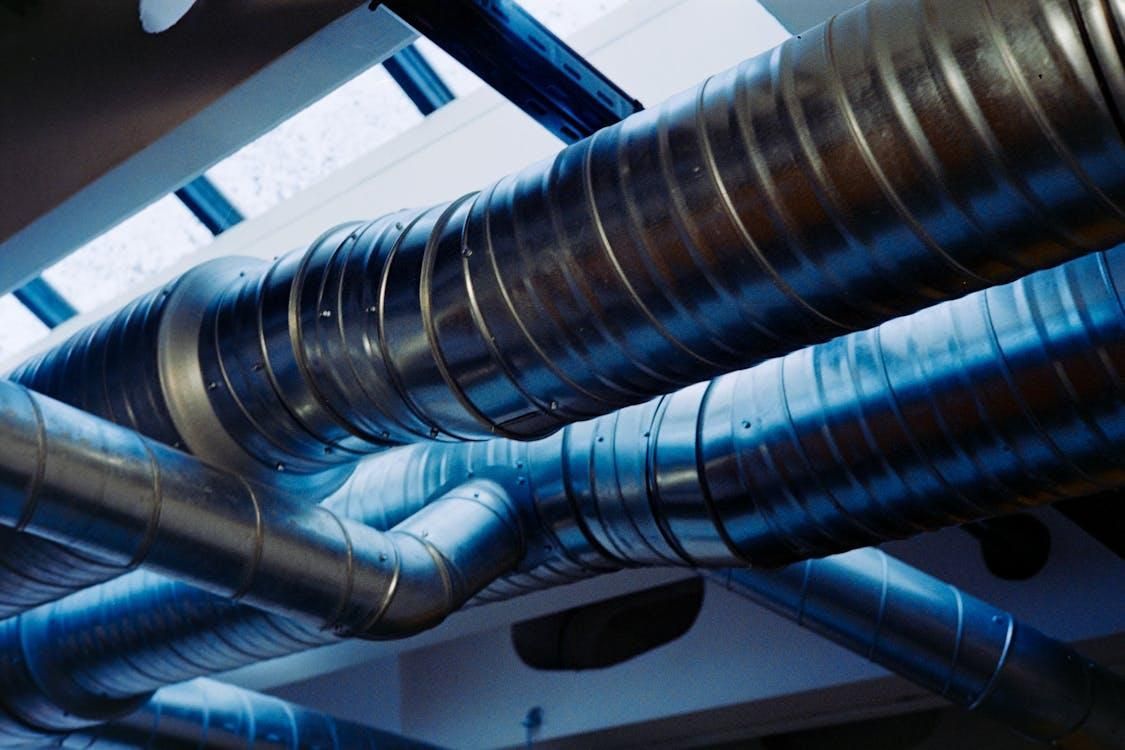
Your ductwork is the delivery system for your comfort, acting as the circulatory system for your home’s climate. Unfortunately, it is often the most neglected part of the HVAC setup. If your ducts have leaks, holes, or separated joints, they are not just losing cool air; they are actively working against your cooling system. When there is a leak in the return-air ducting—which is often located in hot, damp areas like an attic, a crawlspace, or behind walls—it acts like a vacuum. Instead of pulling air from the living space to be cooled, it pulls in hot, humid, unconditioned air from those outside zones.
This "unconditioned" air mixes with your cooled air, instantly reintroducing massive amounts of moisture into your home. This is a very common issue in older properties where metal ductwork has rusted or flexible ducts have torn over time. When we perform air conditioning repair services in Delaware, we frequently find that simply sealing and insulating this ductwork is the "silver bullet" for stubborn humidity issues. By ensuring your system is exclusively circulating the air inside your living space—and not the air from your humid, sweltering attic—you instantly improve your indoor climate. Furthermore, this reduces the overall load on your cooling equipment, allowing it to function as a closed-loop system that prioritizes dehumidification rather than fighting a constant battle against outside moisture.

4. The Role of Maintenance and Refrigerant Levels
Refrigerant is the vital lifeblood of your cooling system. It is the sophisticated chemical compound that cycles continuously through your evaporator coil to absorb both heat and moisture from your indoor air. This process is highly dependent on precision; the coil must reach a specific, freezing-cold temperature to trigger the physical process of condensation. If your refrigerant levels are even slightly low, the evaporator coil cannot reach that required temperature threshold. Without that sufficiently cold surface, the moisture in your home’s air simply passes through the system untouched, leaving the indoor air feeling heavy, sticky, and persistently humid.
While a modern, hermetically sealed cooling system is designed to hold its charge indefinitely, it should never technically "run out" of refrigerant. However, microscopic leaks can—and often do—develop over time due to constant mechanical vibration, seasonal expansion and contraction, or simple oxidation and corrosion of the copper tubing. Many homeowners ignore these subtle signs, assuming their system is just "old."
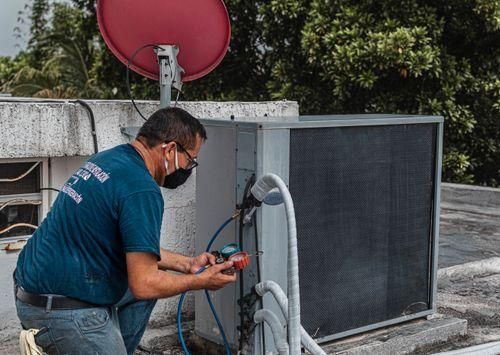
If you suspect your system is underperforming, do not wait for a total system shutdown or a catastrophic compressor failure, which are often the results of running a system with insufficient refrigerant. Calling for professional AC repair in Delaware allows our technicians to use high-precision manifold gauges to check operating pressures, visually inspect for oily residue indicating leaks, and verify that the refrigerant cycle is perfectly optimized for maximum moisture removal. Proper, routine maintenance is the true hallmark of reliable HVAC services in Delaware. It ensures that your expensive equipment is serving its dual purpose as both a cooler and an effective dehumidifier. When refrigerant levels are maintained exactly where the manufacturer intended, the coil stays at the perfect temperature to "wring" the moisture out of the air efficiently, cycle after cycle. This level of maintenance is the most proactive step you can take to prevent the "muggy" feeling that ruins your indoor comfort.

5. When Is It Time for Professional Help?
There is a point where even the most diligent maintenance isn't enough. If you have verified that your filters are clean, your ducts are sealed, and your system is correctly sized, but the humidity at home is still creeping above 60% on your hygrometer, you may need more specialized, advanced solutions. Some homes are simply prone to higher moisture levels due to their geographic location, low-lying landscape, basement floor plans, or even the lifestyle of a high-occupancy household with frequent cooking and showering.
In these cases, we often recommend installing a whole-home dehumidifier that integrates directly into your existing HVAC ductwork. Unlike a portable unit that sits in a corner and requires you to empty a bucket every day, these integrated systems work in tandem with your AC to guarantee a specific humidity setpoint, regardless of what the weather is doing outside. A whole-home dehumidifier can pull moisture out of the air even when your AC is not in a cooling cycle, providing a level of control that standard equipment simply cannot match. If you are tired of feeling sticky and muggy in your own home, it is time to consult with an expert in air conditioning repair services in Delaware about your options. Our team can help you weigh the investment of an integrated system against the ongoing struggle of fighting moisture on your own, ensuring that your home remains a dry, comfortable sanctuary throughout the most humid months of the year. Investing in the right tools—be it a repair, a duct fix, or a whole-home solution—is the only way to master the indoor climate once and for all.

Why We Are the Team to Call
At Dixie Land Energy, we understand that "comfort" is a holistic experience. It is not just about the numbers on the thermostat; it is about how the air feels, how you breathe, and how well your home protects your health. We treat every humidity issue as a diagnostic puzzle. We look at the sizing, the airflow, the insulation, and the mechanical health of the unit to find the root cause of the mugginess.
We don't believe in quick fixes that mask the problem. We believe in providing lasting solutions that make your home a refuge from the summer heat. If you are tired of the humidity and want to understand why your cooling system isn't delivering the crisp air you were promised, we are here to help.
Reach Out to Us Today
Don’t settle for a humid house this summer. If your AC is running but the air still feels heavy, give us a call. We have the technical expertise to diagnose the issue, perform necessary AC repair in Delaware, and get your system back to creating the environment you deserve. We are proud to provide comprehensive air conditioning repair services in Delaware that go beyond the basics to ensure your total home comfort. Contact our team today—we are ready to help you reclaim your cool, dry home.